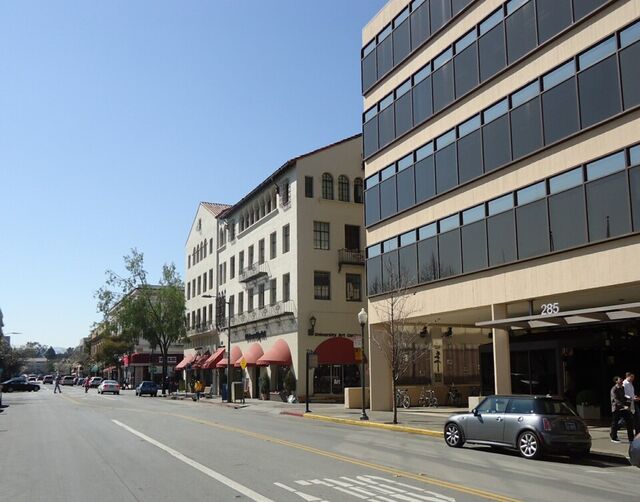
My wife and I have been looking to buy a bigger apartment in Sarajevo. We need a kid’s room. Last month we found a place we liked. Good neighborhood, close to family, decent layout. The asking price made no sense for a forty-year-old building with Soviet-era plumbing. I told the real estate agent the building itself is not worth that. He shrugged and said: “You are not paying for the building. You are paying for where the building is standing.”
 Sarajevo, Bosnia and Herzegovina — where the building might crumble, but the address does not change. Photo: Wikimedia Commons, CC BY-SA 3.0
That conversation has been stuck in my head ever since, because a week later I watched Elon Musk’s interview with The Economist where he said something that made me stop and think. At first it sounds crazy. Then you think about it and it starts to make sense. Then you think about it some more and realize it is wrong, for reasons Musk never addresses.
Musk’s claim: AI and humanoid robots will massively increase the output of goods and services, causing deflation so severe that money and traditional retirement savings will eventually lose their relevance. We will enter a post-labor “age of abundance” where the cost of everything trends toward zero.
His logic is clean. His conclusion is wrong. And the gap between the two tells you everything about where the economy is actually heading.
In the same interview, Musk put a date on it:
“Money won’t matter in 2036.” — Elon Musk, interview with The Economist, July 2026
The Part Where Musk Is Right
Let me give Musk credit where it is deserved, because the underlying force he is describing is real.
If autonomous AI and humanoid robots can handle cognitive and physical labor at scale, the marginal cost of producing goods and services collapses. Software that used to require ten engineers gets built by three. Legal contracts that required a team of associates get drafted by one lawyer with an AI assistant. An audit that took a week takes a day.
I have seen this firsthand. In my consulting work, clients who used to hire five developers for a project now hire two and hand the rest to AI tools. The work gets done. The quality is comparable. The cost dropped by more than half.
“I’ll make a prediction, which is that deflation will be the issue, not inflation. As the output of goods and services increases faster than the money supply, you will have deflation.” — Elon Musk, interview with The Economist, July 2026
This is not speculation. It is already happening in software, accounting, legal services, and customer support. Companies are achieving the same output, sometimes higher, with smaller teams. When labor is 70% to 80% of your operating costs and you cut that by half, prices have to come down eventually. Competition forces it.
Former US Treasury Secretary Larry Summers, who sits on OpenAI’s board, agrees that the scale of disruption is historic:
“If one takes a view over the next generation, this could be the biggest thing that has happened in economic history since the Industrial Revolution.” — Larry Summers, Fortune Innovation Forum, March 2024
The Great Deflation of 1870–1896 proved this pattern already. The Second Industrial Revolution introduced railways, steel mills, and automated manufacturing. Prices fell steadily by roughly 30% over two decades. But US real GDP grew at about 5% per year during that period. Living standards skyrocketed because wages held steady while everyday goods became significantly cheaper.
Joseph Schumpeter described this pattern decades ago. He called it the “perennial gale of creative destruction,” the way innovation tears through old industries and replaces them with something cheaper and better. In his 1942 book Capitalism, Socialism, and Democracy, he wrote:
“This process of Creative Destruction is the essential fact about capitalism.” — Joseph Schumpeter, Capitalism, Socialism, and Democracy (1942)
Musk is pointing at the same kind of productivity revolution. And on the supply side, he is right.
The Part Where Musk Skips Over Reality
Here is where my real estate agent in Sarajevo knows something that Elon Musk either does not know or chooses to ignore.
Zero marginal labor cost does not mean zero marginal resource cost.
Robots and AI eliminate the cost of human labor. They do not eliminate the physical limitations of the planet. Prime real estate, beachfront land, rare minerals like lithium and copper, clean water, agricultural land. These things are strictly finite. A robot cannot create more of them.
Even if a humanoid robot can build a house for free, the land it sits on still carries inherent scarcity. The materials used to build it (the copper wiring, the lithium batteries, the concrete) still come from mines and quarries that have physical limits. The electricity to power those robots still comes from grids that are already straining under the load of AI data centers.
I ran a hosting company for fifteen years. I learned early that the cost of running servers was not mainly about the hardware. It was the electricity, the cooling, the physical space in the data center. You can make software infinitely efficient, but the kilowatt-hour does not care about your code quality. Physics does not negotiate.
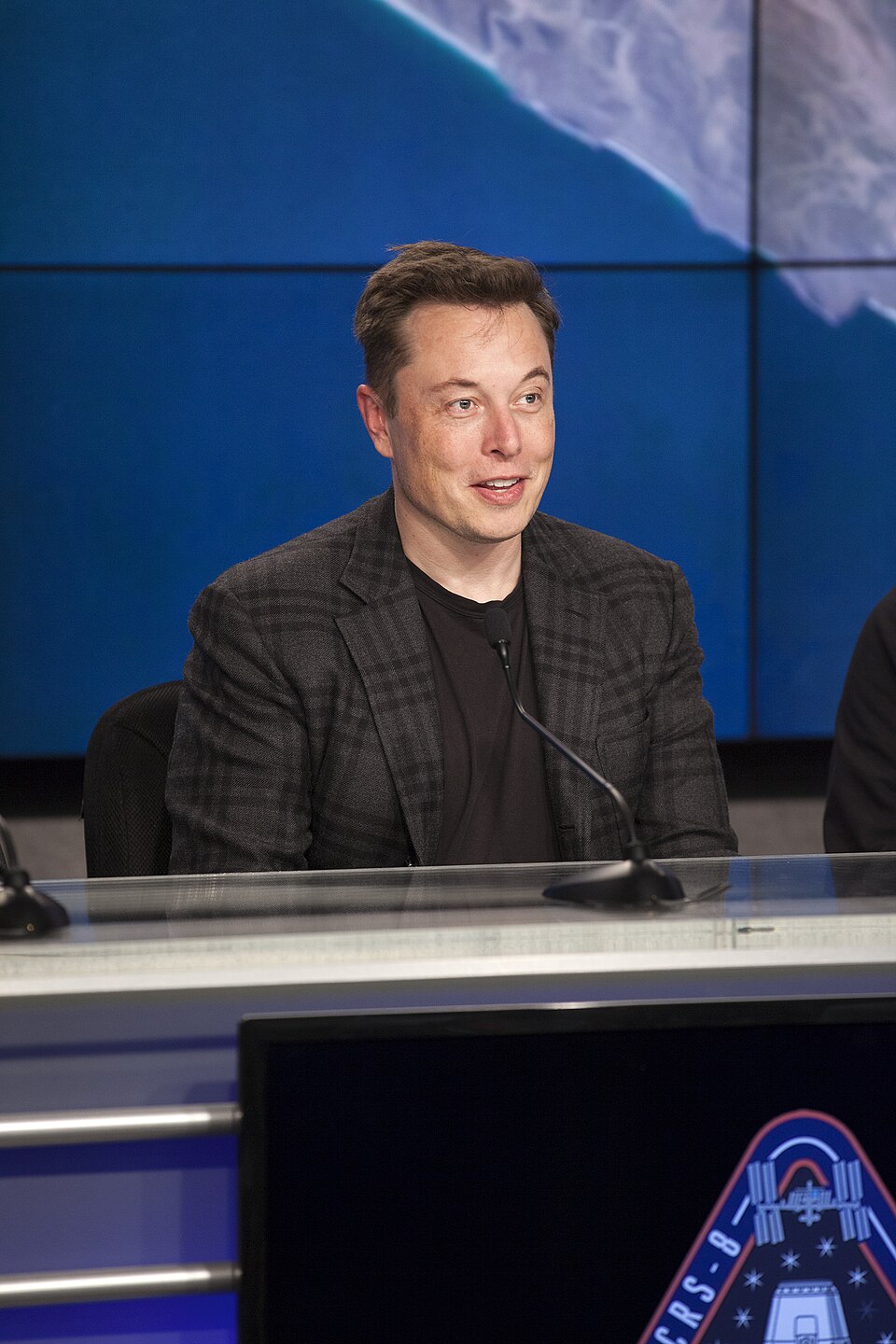 Elon Musk at a SpaceX press conference. Photo: SpaceX, CC0 via Wikimedia Commons
The Bottleneck of Things You Cannot Manufacture
Musk’s vision assumes that abundance means everything becomes cheap. But human economies rely heavily on what economists call positional goods, things that are valuable precisely because they are scarce.
A seat in the front row of a concert. A house in a specific historic neighborhood. A table at a restaurant where the chef is a person you want to watch cook. Artwork by a specific human creator. A plot of land where the view is the Mediterranean.
Robots cannot manufacture any of these. They are limited by definition. And because they are limited, people will always use money to compete for them.
Henry George understood this in 1879. In Progress and Poverty, he wrote a sentence that reads like a prediction of the AI economy, 145 years before anyone heard of ChatGPT:
“The great cause of inequality in the distribution of wealth is inequality in the ownership of land.” — Henry George, Progress and Poverty (1879)
George saw how technological and social advances increased the value of land, and thus the amount of wealth that landowners could extract from everyone else. Replace “technological advances” with “AI” and his analysis reads like it was written yesterday.
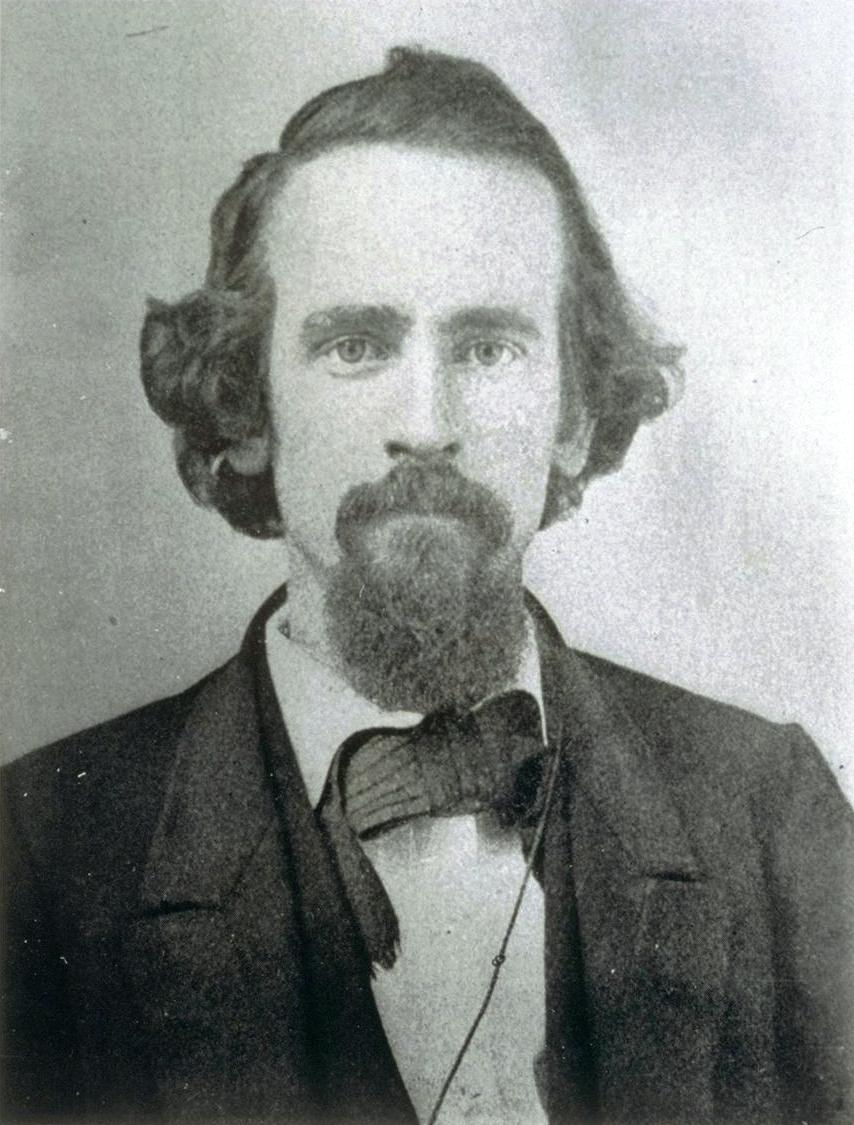 Henry George (1839–1897), author of Progress and Poverty. Photo: Wikimedia Commons, Public Domain
When I was running my hosting company, I once had a client who wanted his servers in a specific data center in Frankfurt. Not because it was cheaper, but because the latency to his customers was 3 milliseconds lower there than anywhere else. He paid triple the price for that specific location. The server hardware was identical. The software was identical. The value was in the geography. No amount of AI could have replicated that.
The Great Split: Digital Deflation Meets Physical Inflation
What we are heading toward is not universal deflation. It is what I call bifurcated deflation. A split economy where two completely different price realities coexist.
The AI-Deflationary Sector: Software, legal services, accounting, media production, customer support, digital design, online education. These will get dramatically cheaper. Near-zero marginal cost to reproduce digital cognitive work. High market competition forces prices down relentlessly.
The Physical-Inflationary Sector: Housing, electricity, land, healthcare, physical raw materials, food staples, energy. These remain expensive because they are bound by finite natural resources, energy grid constraints, zoning laws, and climate realities.
You might end up paying 90% less for software, accounting, or legal advice. But that saved money will quickly get absorbed by the cost of housing, power, and physical services.
This is not a new pattern. It has a name: Baumol’s cost disease. Economist William Baumol identified it in the 1960s and spent decades explaining why certain costs never come down no matter how advanced technology gets:
“The basic underlying problem does not entail misbehavior or incompetence but rather stems from the nature of the provision of labor-intensive services.” — William Baumol, The Cost Disease: Why Computers Get Cheaper and Health Care Doesn’t (2012)
As technology makes some sectors exponentially cheaper, the sectors it cannot touch take up a larger and larger share of your household budget. Your Netflix subscription got cheaper. Your rent did not.
What Actually Happens to Real Estate
This is where my Sarajevo real estate agent was accidentally more right than Elon Musk.
In a world where AI and robotics drive down construction costs, real estate splits into two entirely different assets:
The structure deflates. If humanoid robots can handle design, raw material extraction, factory manufacturing, and on-site assembly around the clock, construction costs could drop by 70% to 90%. The physical cost to build a 2,000-square-foot structure plummets. Housing supply surges. The price per square foot of built structure collapses.
The land inflates. You cannot build more land in prime areas: coastal cities, historic centers, desirable climates, top school districts. If physical goods and building materials become dirt cheap, excess capital floods into scarce, tangible assets that cannot be replicated. The underlying plot of land in a high-demand location skyrockets in price, even as the building sitting on top of it costs next to nothing to construct.
If you already own an apartment in a prime location, you own a slice of non-replicable physical space. In an era where digital goods and cognitive labor trend toward zero cost, that physical scarcity becomes relatively more valuable, not less.
The agent was right. The price was for the coordinates, not the concrete. And in Musk’s future, those coordinates only get more expensive.
As Mark Twain reportedly put it:
“Buy land, they’re not making it anymore.” — attributed to Mark Twain
Why Food Does Not Get Cheaper Either
One of the first things people ask when they hear about AI-driven deflation: “So groceries will be cheaper, right?”
Not really. And Nobel Prize-winning economist Daron Acemoglu would push back on the premise itself. He argues that the entire direction of AI development is wrong, focused too much on replacing workers instead of empowering them:
“We currently have the wrong direction for AI. We’re using it too much for automation and not enough for providing expertise and information to workers.” — Daron Acemoglu, Nobel laureate, MIT Technology Review (2025)
If Acemoglu is right, the deflationary pressure Musk predicts may be weaker than expected, because AI’s biggest gains would come from making workers more productive, not from eliminating them entirely.
 A combine harvester at work. AI can optimize the route, but it cannot create the rain that grew the wheat. Photo: Wikimedia Commons, CC BY-SA 3.0
AI and automation are cutting costs on the farm: precision farming, autonomous tractors, supply chain optimization. But food production operates under fundamentally different constraints than software:
- Energy and fertilizer costs dominate agriculture. Diesel for tractors, natural gas for nitrogen fertilizer, electricity for processing plants. If energy prices stay high, or rise because AI data centers are consuming staggering amounts of power, food production gets more expensive regardless of farm automation.
- Climate and extreme weather directly shrink crop yields. A supercomputer cannot create rainfall or stop a heatwave from destroying harvests.
- Arable land and clean water are strictly finite. AI can optimize water usage, but it cannot manufacture new farmland.
And here is the part that surprised me when I thought about it: even if knowledge workers like engineers, lawyers, and accountants have less money because AI is replacing their jobs, that does not push food prices down. Food is an inelastic good. People still have to eat. An unemployed engineer might trade down from organic groceries to store brands, but their baseline food consumption barely changes. And these high earners are a small percentage of total food buyers anyway.
The grocery store cannot sell food below what it cost to produce. If it costs three dollars to grow, package, and ship a dozen eggs, falling wages in the tech sector will not force the price of eggs down to a dollar fifty. The farmer simply reduces production or exports elsewhere until prices stabilize above cost.
Why Central Banks Will Not Let Full Deflation Happen
Even if AI creates massive deflationary pressure, there is one institution that will fight it with everything it has: central banks.
Modern economies run on debt. Your mortgage, your car loan, your government’s bonds. All of these assume that money will be worth slightly less tomorrow than it is today. That is how inflation works, and it is why central banks target roughly 2% inflation.
In a deflationary environment, the opposite happens. Cash becomes more valuable over time, which makes existing debts harder to pay off. If your mortgage payments stay the same but your salary drops because your industry is being deflated by AI, you are in trouble. Multiply that by millions of households and you get a financial crisis.
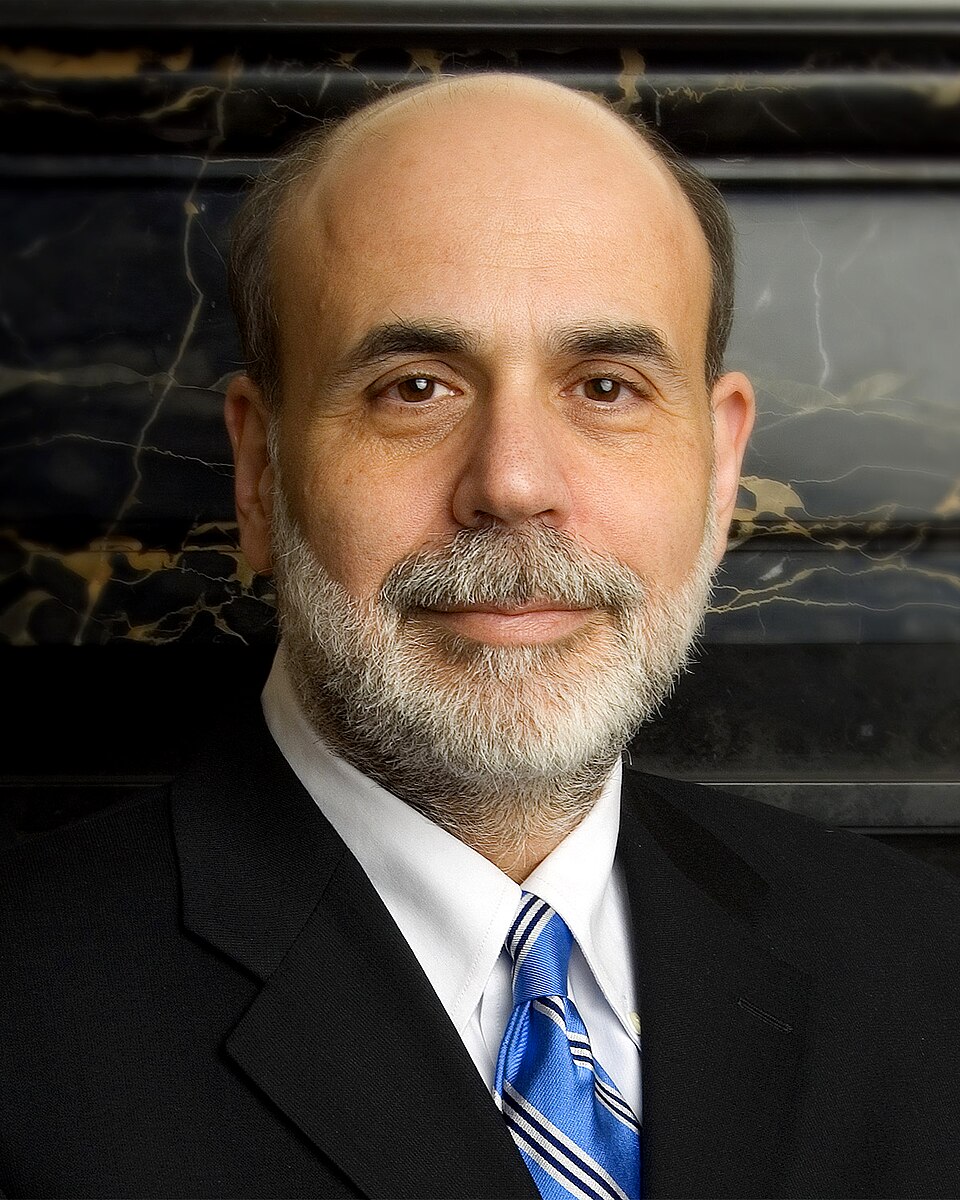 Ben Bernanke, former Federal Reserve Chairman, who warned about deflation long before AI was on anyone’s radar. Photo: Federal Reserve, Public Domain
Central banks know this. Ben Bernanke spelled it out in his famous 2002 speech, long before AI was on anyone’s radar:
“Sustained deflation can be highly destructive to a modern economy and should be strongly resisted.” — Ben Bernanke, “Deflation: Making Sure ‘It’ Doesn’t Happen Here,” November 2002
If AI productivity threatens to drag the Consumer Price Index into negative territory, central banks will react aggressively: cutting interest rates toward zero, printing money through quantitative easing, funding public spending, or even implementing some version of Musk’s “Universal High Income.”
Japan already proved what happens when a wealthy nation lets deflation take hold. Economist Richard Koo of Nomura Research Institute coined the term “balance sheet recession” to describe Japan’s lost decades, where corporations sat on mountains of cash but refused to invest:
“This massive shift in corporate behavior — minimizing debt in order to repair balance sheets — is the root cause of both the deflation and the non-performing loan problems that have troubled Japan for so long.” — Richard Koo, Balance Sheet Recession (2003)
 Tokyo’s Shinjuku skyline — one of the wealthiest cities on Earth, yet Japan spent thirty years stuck in deflation. Photo: Wikimedia Commons, CC BY-SA 3.0
Japan was one of the wealthiest, most technologically advanced nations on Earth. It still spent thirty years stuck in deflation — not because it lacked wealth, but because that wealth stopped circulating. Central banks will not let that happen again without a fight.
Money will not “lose its relevance.” It will be managed differently.
What I Learned From Fifteen Years of Watching Prices
When I ran my hosting company, I lived through my own version of this bifurcated deflation. I just did not have the vocabulary for it at the time.
The cost of server hardware dropped every year. Processing power got cheaper. Storage got cheaper. Bandwidth got cheaper too. Every year, I could offer my customers more computing power for less money. That was the technology side deflating.
But my electricity bill went up. My data center rent went up. The cost of hiring a system administrator went up. The physical side of the business got more expensive every single year, eating into the savings that technology gave me on the digital side.
I spent fifteen years watching my margins get squeezed between falling digital prices and rising physical costs. I could not charge more because my competitors were offering the same technology for less. I could not cut costs because the electricity company and the data center owner did not care about Moore’s Law.
Carl Benedikt Frey, the Oxford economist who co-authored the 2013 study estimating that 47% of US jobs are exposed to automation, put the historical parallel bluntly:
“AI will have the same effect on white-collar workers as the 1970s de-industrialisation had on blue-collar workers.” — Carl Benedikt Frey, Oxford Future of Work Programme
That is the future Musk is describing, except he only talks about the falling side. He never mentions the real estate agent.
So Is Musk Wrong?
He is half right.
Musk is correct that AI and robotics are a massive deflationary force on the supply side. The cost of cognitive labor is collapsing. The cost of manufacturing will follow. Services that used to require expensive human expertise will become dirt cheap.
He is wrong in assuming that scarcity disappears entirely. It does not. It shifts. As Tyler Cowen, the George Mason economist, put it:
“AI will not bring mass unemployment, but it will change most jobs.” — Tyler Cowen, Fortune, May 2026
The world does not end. It changes shape.
Instead of money becoming useless, the economy will split. Manufactured goods and digital services will become dirt cheap. Finite physical assets — land, energy, raw materials, location — will remain expensive and priced in money.
The software gets cheaper. The electricity to run it does not. The building gets cheaper, but the land it sits on does not. The legal contract costs less, but the courthouse where you file it charges the same.
My real estate agent in Sarajevo understands this intuitively. He does not know anything about Baumol’s cost disease or bifurcated deflation. He just knows that the building might crumble, but the address does not change.
AI can build anything. It cannot build where.
Sources
- Elon Musk interview with The Economist on AI, deflation, and the future of work. The Economist, July 2026.
- Schumpeter, Joseph A. Capitalism, Socialism, and Democracy. Harper & Brothers, 1942.
- Larry Summers on the Economics of AI. Fortune Innovation Forum, March 2024.
- Acemoglu, Daron. “A Nobel laureate on the economics of artificial intelligence.” MIT Technology Review, February 2025.
- George, Henry. Progress and Poverty: An Inquiry into the Cause of Industrial Depressions and of Increase of Want with Increase of Wealth. 1879.
- Baumol, William J. The Cost Disease: Why Computers Get Cheaper and Health Care Doesn’t. Yale University Press, 2012.
- Bernanke, Ben S. “Deflation: Making Sure ‘It’ Doesn’t Happen Here.” Speech before the National Economists Club, November 21, 2002.
- Koo, Richard. Balance Sheet Recession: Japan’s Struggle with Uncharted Economics and Its Global Implications. Wiley, 2003.
- Frey, Carl Benedikt. Insights from Oxford Future of Work Programme. Oxford Martin School.
- Tyler Cowen on the biggest problem of the AI age. Fortune, May 2026.
- Gordon, Robert J. The Rise and Fall of American Growth. Princeton University Press, 2016. (Covers the Great Deflation of 1870–1896.)
- Federal Reserve Economic Data (FRED). Historical CPI and GDP data for the United States, 1870–present.