
I was sitting in a meeting last week where we spent forty-five minutes debating whether employees should be allowed to book flights without manager approval. Forty-five minutes. I zoned out somewhere around minute twenty and started thinking about a chapter in No Rules Rules where Reed Hastings describes the moment Netflix replaced its entire travel and expense policy – every guideline, every approval chain, every receipt-review process – with five words:
Act in Netflix’s best interest.
That’s it. No purchase orders. No pre-approvals. No limits on which hotels you can book or whether you can fly business class. No expense reports submitted to a finance department for review. Five words, and you’re trusted to spend the company’s money wisely.
I kept expecting to read about the inevitable disaster. What I found instead was something far more interesting.
 Photo: Wikimedia Commons. CC BY 2.0.
The Grant Story That Started It All
The origin of the no-expense-policy goes back to 1995, before Netflix even existed. At Hastings’ first company, Pure Software, a sales director named Grant stormed into his office, ears red, and slammed the door.
The employee handbook stated: While visiting a client you can rent a car or take a taxi, but not both. Grant had rented a car because the client’s office was two hours away. Then he took a fifteen-dollar taxi to an evening networking event because he knew everyone would be drinking and he didn’t want to drive.
Finance refused to reimburse the taxi because he already had a rental car. Grant was furious.
“Would you have preferred I drink and drive?” — Grant, as recalled by Hastings in No Rules Rules
Months later, Grant resigned. In his exit interview he said: “When I saw how senior management spends their time, I lost confidence in the company.” Hastings realized the policy wasn’t saving money — it was killing morale.
The First Rule: “Spend Company Money as if It Were Your Own”
When Netflix grew large enough to need an expense policy around 2004, CFO Barry McCarthy brought Hastings a standard corporate expense handbook — the kind with rules about which level of manager can fly business class and how much each employee can spend on office supplies without a signature.
Hastings rejected it. Instead, he wrote one line: “Spend company money as if it were your own.”
It sounded great. But it didn’t work. David Wells, who later became Netflix’s CFO, told a story that explained why. Wells grew up on a farm in Virginia, lived frugally, and flew economy everywhere — even to Mexico for a leadership meeting. When he walked past the Netflix content team sitting in first class wearing airline slippers, they were embarrassed. Not for themselves. For him.
“They weren’t embarrassed to be sitting in first class. They were embarrassed for me — that a key executive at the company would be sitting back in economy!” — David Wells, No Rules Rules
The problem was that “spend like it’s your own money” meant different things to different people. A VP who lived paycheck to paycheck and a VP who grew up wealthy would make opposite decisions.
Five Words That Replaced Everything
So Netflix changed the guideline to something cleaner:
My company existed for over a decade, and in that same stretch the founders in these stories built, sold, rebuilt, failed, and succeeded again. The difference is not speed. It is the willingness to let something end — an old policy, a stale way of doing things — so something better can begin.
Act in Netflix’s best interest.
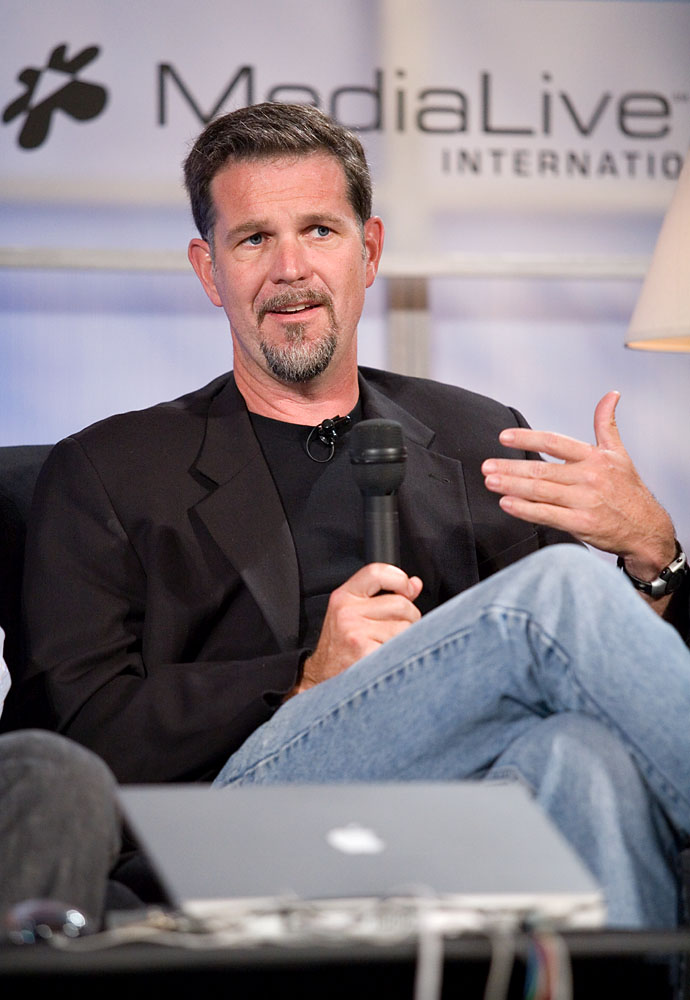 Photo: Wikimedia Commons. CC BY 2.0.
The difference is subtle but powerful. “Your own money” invites frugality for frugality’s sake. “Netflix’s best interest” invites judgment. If you’re flying from LA to New York for a morning presentation, it’s in Netflix’s best interest for you to fly business so you show up rested. If you’re flying LA to Mexico City for a two-hour meeting, economy is fine.
Nick and the $2,500 Samsung TV
The chapter that convinced me this system actually works was the story of Nigel Baptiste and his junior engineer Nick. Nigel was Netflix’s director of partner engagement. His team tested Netflix streaming on TVs made by Samsung and Sony. Netflix had invested heavily in 4K ultra-high-definition streaming and had partnered with Samsung to showcase House of Cards on their new 4K TV.
A Washington Post journalist was coming to review the setup. On Thursday, everything tested perfectly. On Friday morning, Nigel arrived to find the TV was gone — facilities had thrown it away during a cleanup of old equipment.
Nigel panicked. The journalist was due in hours. He started calling electronics stores. None had the TV in stock. Then his most junior engineer, Nick, sprinted in:
“Don’t worry, Nigel. I solved that. I came in last night, and I saw the TV had been disposed of. You didn’t respond to my calls and texts. So I drove out to the Best Buy in Tracy, bought the same TV, and tested it this morning. It cost twenty-five hundred dollars, but I thought it was the right thing to do.” — Nick, quoted in No Rules Rules
A twenty-five-hundred-dollar purchase. No approval. No purchase order. No manager sign-off. Nick had just five words to guide his actions: Act in Netflix’s best interest. And he judged correctly.
The Washington Post review ran. Geoffrey Fowler wrote: “Even the fictitious vice president perspires in ultra-high definition.”
When Freedom Gets Abused
The system isn’t perfect. Hastings is candid about the cheaters. The most famous case involved an employee in Taiwan who traveled frequently and was slipping in personal luxury vacations on the company’s dime. His manager never checked receipts. Finance didn’t audit him. By the time he was caught, he had spent over $100,000 on personal travel. He was fired immediately.
Netflix then told his story — without naming him — at a Quarterly Business Review attended by 350 senior managers. Not to shame him, but to ensure everyone understood: “Abuse the freedom and you’re out.”
But Hastings frames this as a cost-benefit calculation. CFO David Wells estimated that Netflix’s travel expenses were roughly 10% higher than they would be with a formal approval system. Hastings’ response:
“That 10 percent is a small price to pay for the significant gains that come with freedom.” — Reed Hastings, No Rules Rules
The HP Contrast
The chapter becomes most powerful when you compare Netflix to Hewlett-Packard. Jennifer Nieva, a Netflix director of product innovation, told a story from her HP days. She needed to hire specialized consultants for a project. She found the right consultants, got a quote for $200,000, and entered the request into HP’s procurement system.
Twenty signatures were required before she could start. Her boss, her boss’s boss, her boss’s boss’s boss, and over a dozen people she’d never heard of — including staff in the procurement department in Guadalajara, Mexico. The approval took six weeks. By the time it cleared, the consultants had nearly moved on to another client.
Then she joined Netflix. She prepared a three-million-piece direct mail campaign with a sticker price of almost a million dollars. She asked her boss how to get approval. He said: “You just sign it and fax it back to the vendor.”
Jennifer nearly hit the floor.
Freedom Is a Path to Responsibility
What I find most interesting about Netflix’s five-word expense policy is what it reveals about the relationship between freedom and responsibility. Hastings expected that removing rules would lead to chaos. What happened instead was that people started throwing out the sour milk in the refrigerator. They started taking more ownership of the office, of the budget, of the company’s reputation.
“Giving employees more freedom led them to take more ownership and behave more responsibly. That’s when Patty coined the term ‘Freedom and Responsibility.’” — Reed Hastings, No Rules Rules
The insight is counterintuitive: controls don’t create responsibility. Freedom does. When you tell people you trust them to spend money wisely, most of them spend it more carefully than they would under a 200-page handbook — because the handbook gives them permission to game the system within its rules, while five words give them permission to use their judgment.
Not every company can do this. You need talent density first. You need a culture of candor where colleagues call each other out. And you need to fire the cheaters publicly. But if you have those foundations in place, five words might be worth more than your entire finance department’s approval chain.
Sources
- Reed Hastings and Erin Meyer, No Rules Rules: Netflix and the Culture of Reinvention, Penguin Press, 2020 (Chapters 3a, 3b: Remove Vacation Policy; Remove Travel and Expense Approvals)